

Day 2: The High
“I’ll never know
what made it so exciting,
Why all at once
my heart took flight...”
Today’s Songs
Alan Jay Lerner, Frederick Loewe
for “My Fair Lady,” 1956
On the Street Where You Live
I Could Have Danced All Night
You wake up.
It's not morning anymore though.
For a moment you forget where you are.
How you got there.
The last fuzzy moments you can recall start creeping into your consciousness.
Partial conversations, key moments.
There's a cold pain beginning to swell from behind your right eye,
a repulsive taste of dehydration in your mouth.
Oof, guess we did it up last night.
You had a good time, though.
It was another for the books.
Then another memory starts to present itself.
Everyone else leaving, saying goodbye.
The stereo playing something beautiful.
“Here- dance with me,” he said,
gesturing you to come closer.
You resisted, embarrassed.
“Come on, it'll be fun.”
Two sad saps clasping onto each other in the night,
just for a small silver sliver of time
Slow dancing in the kitchen, drunk on champagne.
You think: that was lovely,
But that was it.

Today’s Cocktail:
French 75
Reason:
You’re swept up in the magic, in the mystery, in the possibility of what could be, and you’re completely carried away. No other experience on earth, besides having a little too much champagne, is comparable.
Like yesterday, the gin and lemon intensify the experience, adding a sense of sophistication… and maybe just a touch of devil-may-care confidence and danger.
Recipe:
3/4 oz lemon juice
3/4 oz simple syrup
2 oz gin
2 oz champagne or prosecco
combine simple syrup, lemon juice, and gin in a cocktail shaker with ice
strain into a large flute, top with champagne
garnish with a long spiral lemon rind twist
For a non-alcoholic variation, omit the gin sub sparkling water for champagne.
like yesterday, if you have juniper berries on hand, why not throw them in the shaker with your lemon juice, ice, and simple syrup for a suggestion of gin flavor?
To keep things easy, squeeze some lemon in your sparkling water or chill a bottle of sparkling apple cider and enjoy cold.
1
On the Street Where You Live
I have often walked
down this street before;
But the pavement always stayed
beneath my feet before.
All at once am I several stories high,
Knowing I'm
on the street where you live.
Are there lilac trees
in the heart of town?
Can you hear a lark
in any other part of town?
Does enchantment pour
out of every door?
No, it's just
on the street where you live!
And O!
The towering feeling
Just to know somehow you are near.
The overpowering feeling
That any second
you may suddenly appear...
People stop and stare.
They don't bother me.
For there's nowhere else on earth
that I would rather be.
Let the time go by,
I won't care if I
Can be here
on the street where you live.
Both of today’s songs are from the 1956 stage musical adaptation of George Bernard Shaw’s 1913 play “Pygmalion,” My Fair Lady.
For whatever reason, I took a particular shine to the 1964 film version very very early in life, memorizing the words to all the songs - the meanings of which I of course really knew nothing. I have distinct memories of singing I Could Have Danced All Night which might also be some of my earliest memories of singing at all, and I remember a peculiar fascination and enchantment with the scene of Audrey Hepburn singing it in the film.
The double-VHS tape set with the fraying folded cardstock corners, the long entracte medley, and the songs themselves are among my most precious recollections in what was otherwise a challenging childhood.
When I started picking up jazz gigs at the side of my mentor, I didn’t have much of a song catalog to work with. After all, I was a pop-rock singer-songwriter and had been devoting all of my creative energy toward that pursuit for the several years before.
Some sunny late afternoon, sitting on his porch, he chicken-scratched songs we both knew on a lined notepad, and the seedling of something that is now so near and dear to me- my repertoire, my “book”- was brought to life.
While conversationally mining for music to play at gigs together, we found that we knew quite a few of the same songs - just maybe not what he was expecting. He knew them, from his perspective as a working jazz musician, as kind of cool tunes, almost obscure… mostly well-known songs by the general population but not performed often in the jazz club context.
But, of course, I knew them as musical theatre repertoire - from both my early and ardent love of musical films, as well as the decade of classical and music theatre voice study that ended when I dropped out of University in 2007.
Surely, after this meeting of the minds, I said goodbye and walked the 3-minute walk down the block to my friends’ place where I was living at the time - probably with some acknowledgement that I’d see him soon, or even later that day.
I do often miss those days.
SONG #1
A swingin’ Dean Martin version:
A super-cool, Latin-influenced Nat King Cole arrangement:
The film version:
2
I Could Have Danced All Night
I could have danced all night,
I could have danced all night,
And still have begged for more.
I could have spread my wings,
And done a thousand things
I've never done before.
I'll never know what made it so exciting,
Why all at once my heart took flight,
I only know when he
began to dance with me
I could have danced, danced,
danced all night!
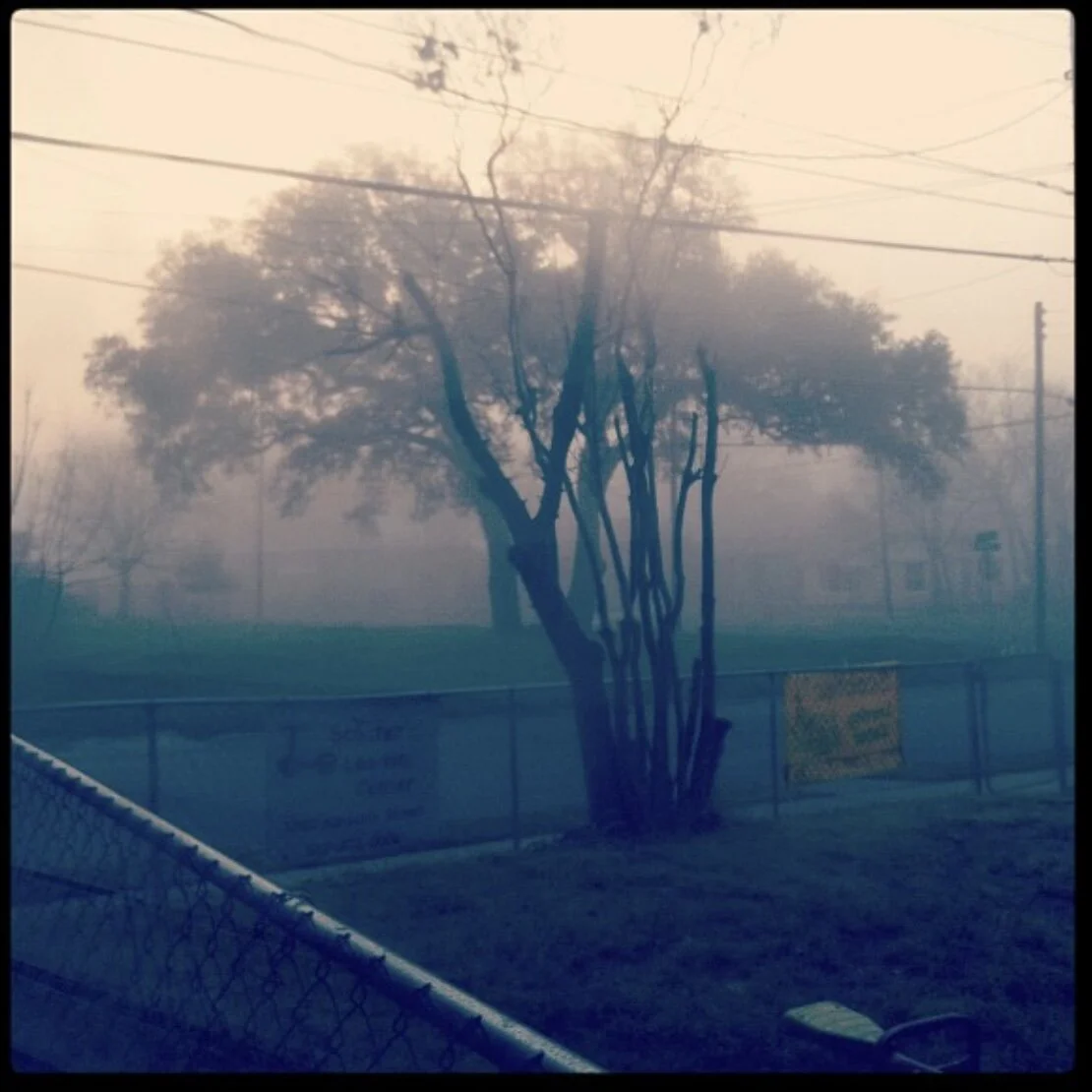
Have you ever met someone with charisma? You probably have. It’s hard to put your finger on it, or even describe it, but you know it once you’ve brushed up against it. My “Henry” had it, and I found myself longing to be around him as often as possible.
Sure, we shared common interests, and I enjoyed our conversations and our creative pursuits, but there was more to it than that. Truthfully, I was only just a baby, a dilettante at the time, but he saw something in me and nurtured it. I wanted more of that. Honestly, I had experienced something like it before, to tragic ends. It left a wound.
Certainly some of my fault in this ultimately failed friendship is that I probably too tried too hard to fill the void with other stimulation (the parties, the drinking, the romantic affairs, this attachment) to try and get that feeling back. To feel connected to the music like I did before I was hurt the first time.
Before I lost touch with that part of me, too, through the years of hustling, of “gigging,” of waiting for industry success to happen to me.
Anyway - living down the street from this particular person while I was in this state of woundedness, and so longing for connection… it felt a bit like being under a spell. I couldn’t wait for the next encounter. There was just something in the air…
Sometimes it felt like a crush. Sometimes I could see plainly that it wasn’t. Sometimes I just didn’t really know.
It did always feel a bit like being under a spell. I couldn’t wait for the next encounter.
There was just something in the air…
On My Fair Lady
In 1950, a producer approached lyricist/librettist Alan Jay Lerner (and, by association, his writing partner Frederick Loewe) about turning the Shaw play into a musical. The source material, however, breaks several key rules for a musical with its lack of a primary love story, subplot, or ensemble moment opportunity. Indeed, most of the original play’s scenes depict its characters conversing after a significant activity or emotional moment, merely alluding to the major plot points that occur offstage, between scenes of dialog the audience sees.
After struggling and ultimately failing their first attempt at the adaptation, they gave up on it for two years. When they came back to it, everything clicked- and the rest (writing of the songs, the casting, and even financing the production) happened fairly quickly. It opened in 1956.
The part of the leading lady, Eliza Doolittle, was originally offered to, but ultimately declined by, Mary Martin (an originator of many major musical production leading roles in the 40s and 50s). The show’s creative team consequently cast a then-somewhat-unknown Julie Andrews after seeing her in her Broadway debut, The Boy Friend.
When casting the 1964 film, the film’s studio, Warner Brothers, wished to have a recognizable name in the role of Eliza Doolittle over Andrews, who, at the time, had no film experience. (Andrews went on to star in Mary Poppins that same year, however, winning both the Academy Award and Golden Globe for Best Actress.)
The My Fair Lady film was a commercial and critical success, winning many Oscars that year of its own, including Best Picture of the Year.
Julie Andrews is one of my most idolized vocal influences, and I love finding clips of her around the internet singing songs in this role for promo in the late 50s. While I think Audrey Hepburn (in conjunction with the provider of her overdubbed singing voice, Marni Nixon) is lovely as Eliza, I do like to daydream sometimes about what a movie version with Andrews might have been like.
We’ll never know- but I’m also sincerely glad Mary Poppins exists!
(FUN FACT: Rex Harrison, the actor who played Henry Higgins in both the stage musical and film adaptations of My Fair Lady, refused to lip-sync to pre-recorded musical tracks during the filming of the 1964 movie. In order to accommodate him, the sound department developed a wireless microphone to record his singing and dialog in musical sequences during filming in real-time. This had never been done before!)
SONG #2
Julie Andrews
live on Ed Sullivan:
Audrey Hepburn
(dubbed by Marni Nixon):
A swingin’ version by
Old Blue Eyes himself
(Frank Sinatra):
Another hip,
Latin-tinged arrangement
of Nat King Cole’s:
how sweet and strange
That whole bit about dancing in the kitchen in the middle of the night really happened. There was a moment as my cheek rested against his shoulder where I wondered if we’d ever dance like that again…
we never did.
This is what was playing on the stereo: